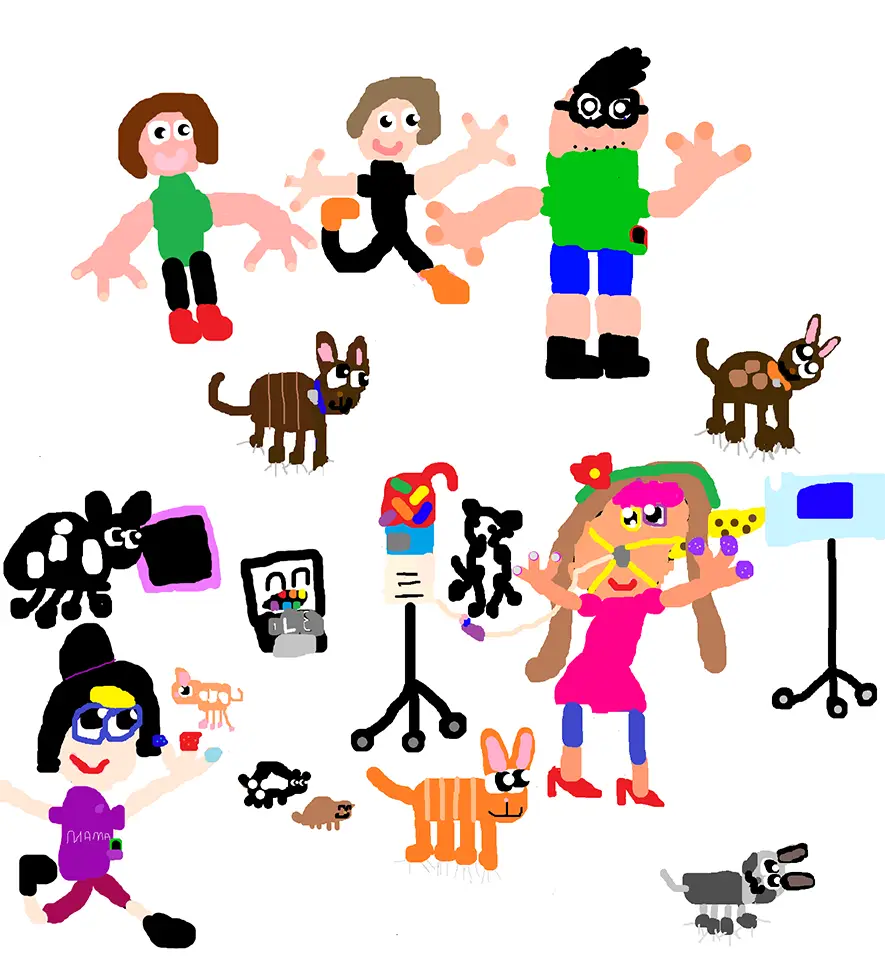
“Take your daughter home and enjoy your time together.”
That was the medical advice given to the O’Sullivan family when they learned their daughter, Aubrey, had been diagnosed with an ultra-rare disease that had no cure and no treatment options.For most, a diagnosis is the beginning of a journey to find answers and treatment. For the O’Sullivans, it was the beginning of a race against a disease they had never heard of that was taking their daughter from them far too quickly.
Diagnosis
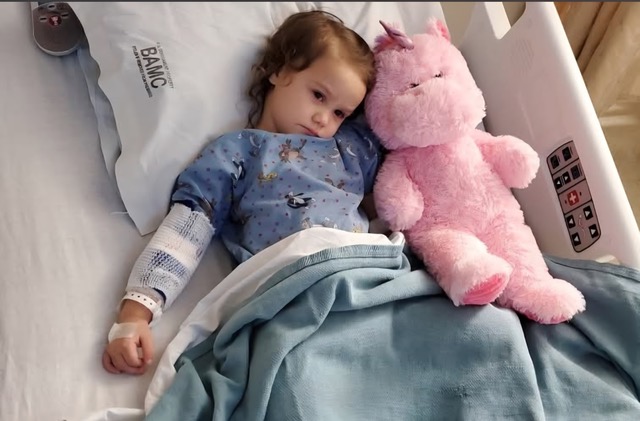
Everything changed for Aubrey when she was just 3 years old.Once a healthy, active, able-bodied toddler, Aubrey suddenly began walking with a limp. What initially seemed like a small change quickly became something much more serious.
After being referred to a neurologist and undergoing a muscle biopsy, Aubrey was diagnosed with Reducing Body Myopathy (RBM), an ultra-rare and rapidly progressive muscle-wasting disease caused by a mutation in the FHL1 gene. At the time of her diagnosis, fewer than 30 cases had been documented worldwide.
Because of the rarity of the disease, Aubrey’s family was told there were no effective treatments and no cure to stop the progression of muscle loss. They were warned that the disease would continue to progress rapidly leaving Aubrey in a flaccid paralysis and requiring full support. And it did. Within just 10 months of her first symptoms, Aubrey had become wheelchair-bound. Her parents watched helplessly month-after-month as their daughter lost ability after ability. “We wrote everything down,” said her mom, Allison. “Our calendar quickly became full of notes of losses from her disease progression. It was an absolute nightmare.”
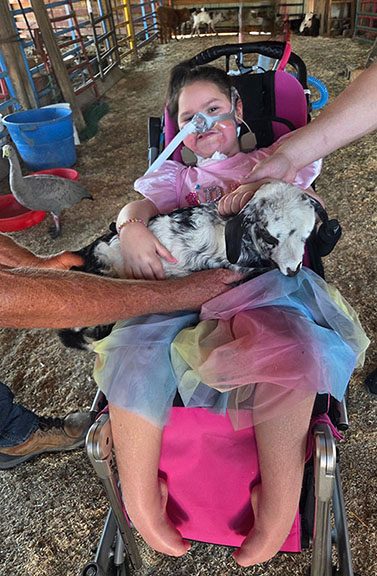
Just two years after her initial diagnosis, RBM had progressed to the point that Aubrey was left in a flaccid paralysis and required full support for nearly every aspect of her life, including breathing and nutrition. But despite everything they were told, her family refused to give up.
Finding Hope
After being told there was nothing available to stop the progression of Aubrey’s disease, the O'Sullivans began searching for help, and answers anywhere they could find them.
Allison spent countless hours researching RBM, reaching out to researchers and searching for anyone who might be willing to help her daughter. That search eventually led her to researchers Jude Samulski and Anna Tretiakova.
When Aubrey was just 4 years old, they agreed to take on the challenge of developing a gene therapy for her disease. For the first time since Aubrey’s diagnosis, her family had something they had been desperately searching for: hope. “It felt like we could take a breath again,” Allison said. But developing a treatment would take years and for Aubrey, every moment mattered.
Treatment
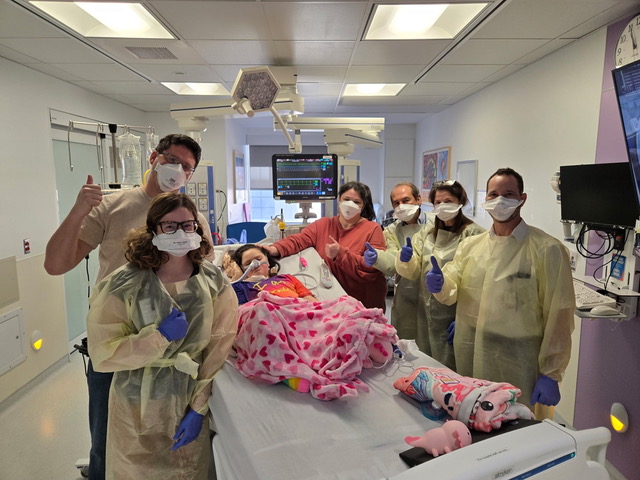
Four years after her family first connected with Jude and Anna, Aubrey received her gene therapy in February 2026. The treatment uses a viral vector to deliver a healthy copy of the gene into her body, with the goal of slowing or potentially stopping the progression of RBM.
Because Aubrey’s disease is so rare, there was no established treatment to turn to. Her gene therapy represented years of research, determination, devotion, and the willingness of the entire research team to take a chance on something that had never been done for RBM before. So far, the results have been encouraging. Within just a couple of weeks of treatment, Aubrey began showing small improvements.
By June 2026, four months after receiving gene therapy, Aubrey had regained the ability to chew and swallow food. Her speech had become clearer and louder. She also demonstrated increased hand strength, including the ability to wave with her right hand. She also began showing minor movement in both her arms and legs that she had not been able to produce in over a year. Doctors remain cautiously optimistic, and it is still too early to know how significant or lasting the effects of the gene therapy will be. An MRI scheduled for September will compare Aubrey’s muscle imaging from before and after treatment, providing another important piece of information as doctors evaluate her response to the medication.
For now though, Aubrey continues to undergo extensive medical monitoring every couple of months, including EKGs and echocardiograms, speech evaluations, swallow studies, muscle MRIs, physical therapy evaluations, extensive bloodwork, and pulmonary function testing…all while taking full advantage of her newly regained abilities. “This medicine has drastically changed her quality of life,” said Allison. “Aubrey is getting to enjoy her favorite foods again, she is able to communicate more effectively, she is able to play with her controller and use her powerchair without needing breaks from hand fatigue...I didn't think I'd ever see this strength again, it is a miracle.”
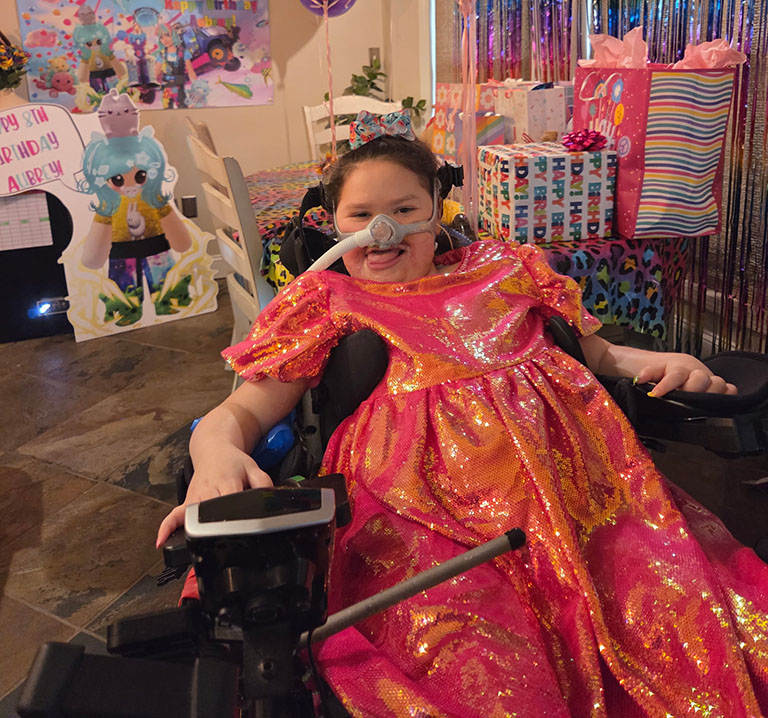
Aubrey Today
Despite everything she has endured since her diagnosis, Aubrey remains the same bright, happy, and determined little girl her family has always known. “Her disease has changed what her body can do, it has never changed who she is,” said Aubrey’s mom.
Aubrey loves animals and dreams of one day having her own little farm filled with goats, mini cows, and chickens. She enjoys spending time with her family and her pets that include her sheepdog named Biscuit, her small Coton de Tulear named Teddy, who she received through Make-A-Wish, her cat she cuddles with every night, and her aquarium full of fish she loves to feed.
She loves playing with her two older brothers, talking with friends online, and playing video games with her adapted controller. “We have to get a bit creative with adaptions sometimes, but Aubrey does not let RBM hold her back, “Allison said. “She has such a big personality and determination for life and thanks to gene therapy, dreaming about the future doesn’t seem so scary anymore.”
How You Can Help
Aubrey’s family hopes that sharing her story will help bring more awareness to Reducing Body Myopathy and, ultimately, help other families facing this devastating disease.
To raise awareness and help fund research toward a cure, the O’Sullivan family established a nonprofit organization and shares Aubrey’s journey with RBM on Facebook.
Their mission is to bring awareness to this ultra-rare disease, support research and gene therapy development, and help expand access to potential treatments for future patients.
Aubrey’s story began with a devastating diagnosis and words no parent should ever have to hear. But her family chose not to stop there. Now, thanks to the efforts of everyone who worked to bring this gene therapy to life, they finally have something they were once told they would never have: hope.